

How a Forex Back Office Solution Can Transform Your Brokerage in 2026
Aug 25, 2026 • Blog
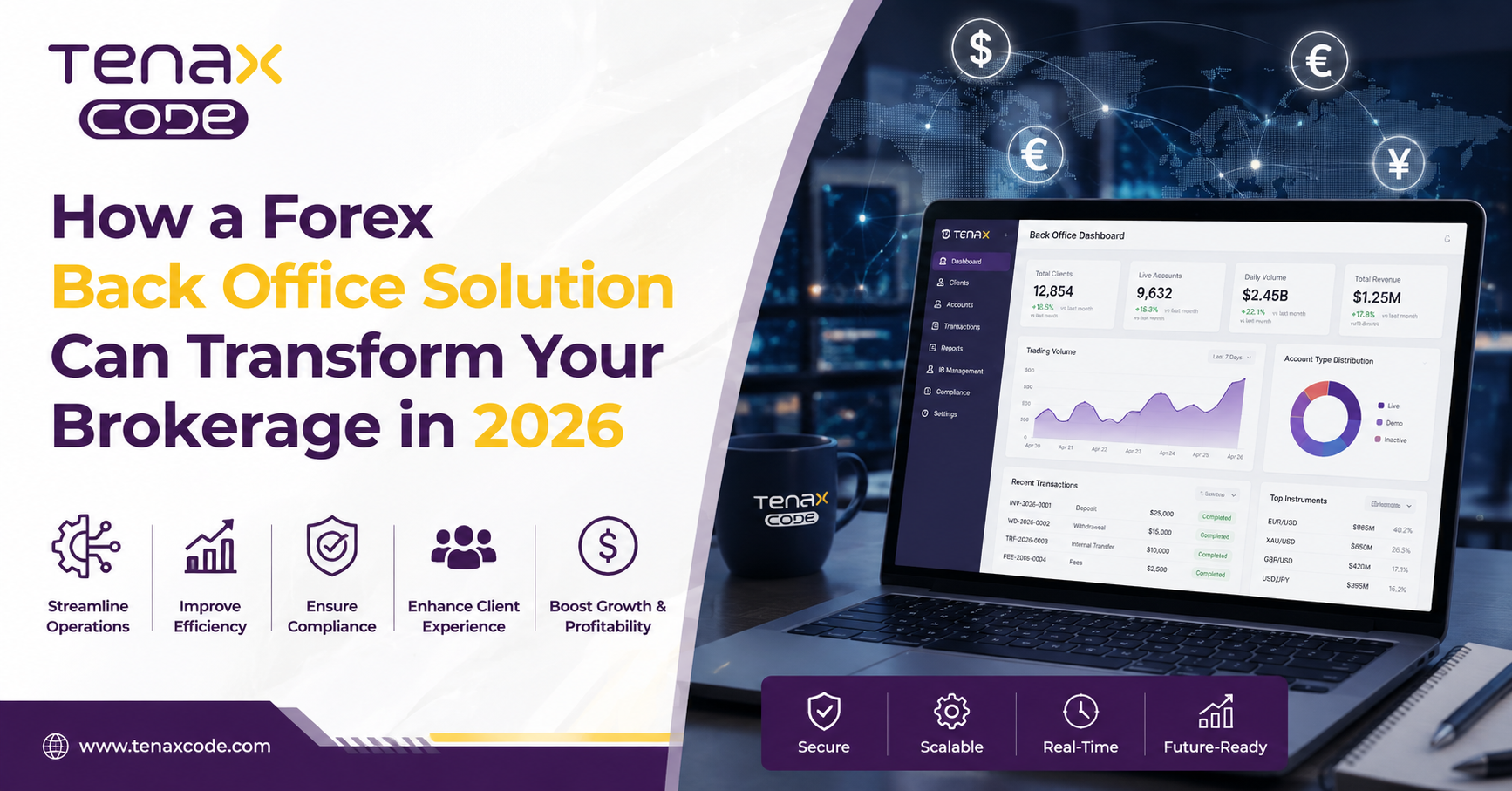
Running a successful Forex brokerage in 2026 requires more than a trading platform and a client acquisition strategy. Brokers must efficiently manage client accounts, deposits and withdrawals, KYC processes, commissions, reporting, risk data, and operational workflows. This is where a Forex back-office solution becomes an important part of modern brokerage infrastructure.
A well-designed back-office system can centralize operations, reduce manual work, improve data visibility, and help brokers deliver a smoother client experience. When combined with reliable Forex CRM solutions, it can create a connected operational environment for managing the complete client lifecycle.
What Is a Forex Back Office Solution?
A Forex Backoffice solution is a technology platform designed to help forex brokers manage the operational and administrative side of their business.
While traders primarily interact with the trading platform and client portal, brokerage teams use the back office to manage activities such as:
- Client account management
- KYC and verification workflows
- Deposits and withdrawals
- Commission and fee management
- IB and affiliate management
- Client reporting
- Trading-related data
- User permissions
- Operational monitoring
- Financial and business reports
Instead of relying on multiple disconnected systems and spreadsheets, brokers can use a centralized solution to organize critical information and workflows.
Why Forex Brokers Need a Modern Back Office in 2026
The forex industry is becoming increasingly technology-driven. Clients expect fast onboarding, convenient payment options, transparent account information, and responsive support. At the same time, brokerage businesses need better operational control as their client base grows.
A traditional manual process may work for a small operation, but it can become difficult to manage at scale.
A modern Forex broker CRM and back-office infrastructure can help businesses automate repetitive processes while giving management teams better visibility into brokerage operations.
1. Centralized Client Management
A Forex Backoffice solution can bring important client information into one centralized environment.
Brokerage teams can manage client profiles, account details, verification status, transaction information, communication history, and other operational data from a single system.
This reduces the need to switch between multiple platforms and can make internal workflows more efficient.
2. Streamlined KYC and Onboarding
Client onboarding is one of the most important operational processes for a forex broker.
A back-office system can help organize KYC documentation, verification status, client information, and approval workflows. This can reduce unnecessary manual communication and help brokerage teams process applications more systematically.
However, technology should support—not replace—appropriate compliance procedures and human review where required.
3. Better Deposit and Withdrawal Management
Payments are a critical part of the client experience.
A modern back office can provide brokers with better visibility into deposit and withdrawal requests, transaction statuses, payment methods, and related client information.
Integration with appropriate payment providers can further streamline payment workflows while helping operational teams monitor transactions from a centralized interface.
4. Improved IB and Affiliate Management
Introducing Brokers (IBs) and affiliates can represent an important acquisition channel for forex brokerages.
A capable back-office system can help brokers manage IB profiles, commission structures, referrals, performance information, and related reporting.
This gives brokerage managers a clearer picture of partner activity and helps simplify commission administration.
5. Real-Time Business Visibility
Data is valuable only when brokerage teams can use it effectively.
A modern Forex Backoffice solution can provide dashboards and reports covering areas such as client activity, deposits, withdrawals, revenue-related metrics, commissions, and operational performance.
Better visibility can support faster, data-driven business decisions.
How Forex CRM Solutions and Back Office Systems Work Together
A Forex CRM provider can offer more than a simple customer relationship management platform. Modern forex CRM solutions can connect client management, sales workflows, onboarding, support, payments, and back-office operations.
For example, a potential client may move through a workflow such as:
Lead → Registration → KYC → Account Approval → Deposit → Trading → Retention
Connecting these stages helps brokerage teams understand where each client is within the lifecycle.
When the CRM and back-office environment are properly integrated, information can flow more efficiently between sales, compliance, finance, support, and management teams.
Key Benefits for a Growing Brokerage
Investing in a professional Forex back-office solution can provide several operational benefits.
Reduced Manual Work
Automating repetitive administrative tasks can reduce dependency on spreadsheets and manual data entry.
Improved Accuracy
Centralized data and standardized workflows can help minimize operational errors caused by duplicate or inconsistent information.
Scalability
A scalable system can support increasing numbers of clients, accounts, transactions, and business partners without requiring every process to be handled manually.
Better Client Experience
Faster onboarding, clearer account information, and efficient payment processing can contribute to a smoother customer journey.
Stronger Operational Control
Management teams can gain greater visibility into brokerage activities and use centralized reporting to monitor business performance.
What Should You Look for in a Forex Backoffice Solution?
Before selecting a technology partner, brokers should evaluate the solution based on their specific business model and operational requirements.
Important considerations include:
- CRM and back-office integration
- Client and account management
- KYC workflow support
- Payment integration capabilities
- IB and affiliate management
- Commission management
- Reporting and dashboards
- Role-based access controls
- API and third-party integrations
- Scalability
- Data security
- Customization options
- Technical support
- Regulatory and compliance requirements
A forex CRM provider should also be able to clearly explain how its platform integrates with the broker's existing technology stack.
Choosing the Right Forex CRM Provider
Selecting a forex CRM provider is a long-term technology decision. Brokers should not evaluate platforms only by looking at features or pricing.
Consider the provider's technical capabilities, customization options, integration experience, support model, security practices, scalability, and ability to understand forex brokerage workflows.
It is also useful to request a product demonstration and assess how the platform handles real operational scenarios before making a decision.
Transform Your Brokerage with TenaxCode
For forex brokers looking to modernize their operational infrastructure, TenaxCode provides technology solutions designed around the requirements of modern forex businesses.
A properly implemented Forex broker CRM and back-office system can help connect client management with important operational workflows, giving brokerage teams a more organized and scalable technology environment.
The right solution should ultimately align with your brokerage model, technology stack, operational processes, and compliance requirements.
Final Thoughts
In 2026, technology is becoming increasingly important to the way forex brokerages operate and compete. A modern Forex Backoffice solution can help reduce manual processes, centralize information, improve operational visibility, and support a better client journey.
When integrated with reliable forex CRM solutions, the back office becomes more than an administrative tool—it can become an important component of a brokerage's overall technology infrastructure.
For brokers planning to scale, improve operational efficiency, and create a more connected business environment, choosing the right forex CRM provider can be an important step toward long-term growth.
Frequently Asked Questions
What is a Forex Backoffice solution?
A Forex Backoffice solution is a system that helps brokers manage administrative and operational activities such as client accounts, KYC workflows, payments, commissions, IBs, reporting, and business data.
How does a Forex Backoffice solution benefit brokers?
It can centralize brokerage operations, reduce manual work, improve data visibility, streamline workflows, and support business scalability.
What is the difference between a forex CRM and a back office?
A forex CRM generally focuses on client and relationship management, while a back office focuses more broadly on operational and administrative processes. Modern platforms can combine or integrate both functions.
How should a broker choose a forex CRM provider?
Brokers should evaluate functionality, integrations, customization, scalability, security, support, technical expertise, and compatibility with their existing infrastructure.
Can a Forex Backoffice solution support a growing brokerage?
A scalable solution can help growing brokerages manage increasing client volumes and operational complexity more efficiently, provided the platform is appropriately designed and configured.
Why is a Forex Backoffice solution important in 2026?
As brokerage operations become more technology-driven, centralized systems can help businesses manage complex workflows, improve operational efficiency, and provide better visibility across different departments.